
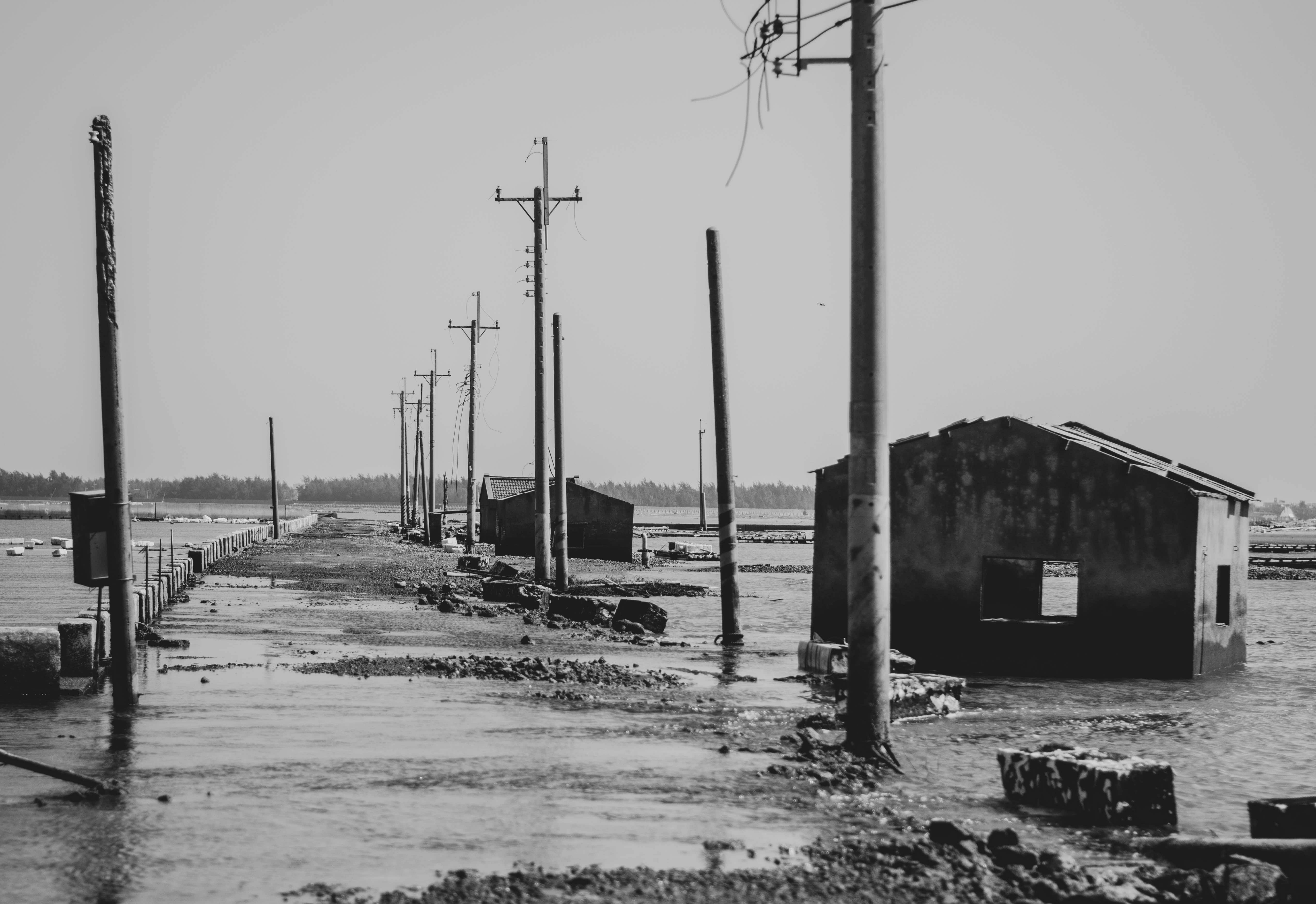
Spend enough years working around overhead line networks and you quickly learn one thing:
A wood pole rarely tells the full story from the outside.
Repeatedly, we’ve inspected poles that looked rough but still had years of service life left in them. We’ve also seen poles that appeared perfectly acceptable above ground and were badly compromised below it.
And then there are the installations themselves.
Over the last 20+ years, we’ve come across poles set too shallow, poles with scarf lines sitting far higher than they should be, and poles that were never properly installed in the first place. The reality is that field conditions, workmanship, weather, loading, and time all leave their mark on a network.
That’s why effective wood pole inspection and testing cannot rely on assumptions, surface appearance, or outdated inspection approaches. If you want reliable engineering decisions, you need accurate data from the part of the pole that matters most: ground line and below.
The Industry Has Moved Beyond Visual Guesswork
The challenge is simple:
Around 90% of wood pole decay occurs at ground line to approximately 100 mm below. Unfortunately, that’s also the exact area many traditional inspection methods struggle to assess properly.
You can’t properly evaluate structural integrity if you’re not assessing the critical decay zone.
And if we’re being honest, most engineers working in the sector already know this: witnessing poles fail unexpectedly; letting the external condition give a false sense of confidence. Even worse, they’ve seen perfectly serviceable poles removed too early because nobody had the data to justify keeping them in service.
That costs money. It costs time. And in most cases, it impacts network reliability unnecessarily.
The Problem with Traditional Testing Methods
Many traditional wood pole inspection and testing techniques originally came from other industries and were never designed for large-scale utility pole assessment.
Resistograph and microdrill systems, for example, originate from arboriculture, where teams assess only a small number of trees each day. In utility networks, inspectors often assess dozens of poles daily under constantly changing field conditions.
The small drill bits in these systems can follow the path of least resistance through fissures or voids, which produces misleading readings and inconsistent data. Frequent bit breakages and high maintenance requirements also make these systems impractical at scale.
Ultrasonic methods such as PURL testing create another challenge. If transducers sit above ground line the critical decay zone may not be fully assessed. Damp conditions also reduce reliability and consistency of readings.
Single-drill methods miss the most critical area because teams typically carry them out above the ground-line decay zone. In most cases, they only confirm suitability for reinforcement rather than true structural capacity.
These methods still have value in specific contexts. However, they often fail to deliver the complete, repeatable, and measurable dataset needed to support confident engineering decisions across an entire network.
PASS: Built Around What Actually Happens in the Field
That’s exactly why we developed PASS – Pole Analysis and Structural Security – within our wood pole inspection and testing approach.
PASS builds on the realities we repeatedly encounter on live overhead line networks.
PASS focuses on the area that matters most: the critical ground-line zone where most deterioration occurs.
During testing we drill three holes equally around the circumference at ground line and angled downward at 45° to assess the timber approximately 100 mm below ground level. We use a shell depth indicator to measure the remaining sound timber and identify internal decay.
Importantly, the inspection does not stop at ground line.
We also carry out a full visual assessment on every pole for:
- pole-top rot
- woodpecker and wildlife damage
- external impact damage
- moisture ingress
- pockets of decay
- historic repairs or reinforcement
- installation irregularities
Scarf lines can become unreliable over time due to weathering, cattle rubbing, vegetation, maintenance activity, or general environmental wear. In these situations, we use specialist probing and void measurement techniques to establish the true base position of the pole and we can update the scarf reference where necessary.
Why We Drill – And Why the Data Matters
We know that some DNOs are understandably cautious about drilling at the base of a pole when carrying out wood pole inspection and testing.
But in reality, if a pole is already suspect, the real question is not whether drilling weakens it – the question is whether the pole is already structurally compromised.
Extensive evidence supports drill-and-test assessment. In North America, utilities routinely assess more than 200 million poles using similar programmes, and studies show this testing typically reduces pole strength by only 2-3%, depending on pole size.
In contrast, the benefit is a far clearer understanding of the pole’s actual condition.
And importantly, many poles that initially appear questionable are found to remain structurally serviceable once properly assessed.
The drill points themselves also provide long-term value. They can later be reused for future condition monitoring or to inject rot-prevention treatment where required.
Without accurate data from the critical decay zone, inspection decisions can quickly become overly cautious, inconsistent, or unnecessarily expensive.
The Reality of Managing Complex Overhead Line Networks
One thing field experience teaches you very quickly is that no two networks behave exactly the same way.
Coastal exposure, water ingress, poor drainage, historic installation quality, soil conditions, loading changes over decades – they all affect pole performance differently.
We regularly inspect and assess poles in tidal environments, waterlogged ground, and locations where traditional assessment methods become far less reliable.
Residual Strength Value (RSV): Moving from Opinion to Evidence
Collecting data is only useful if it leads to better decisions.
That’s where Residual Strength Value (RSV) becomes critical.
RSV calculates how much structural capability the pole still has relative to its original design loading and safety factor. In simple terms, it answers the question:
Is this pole still capable of safely doing the job it was installed to do?
To determine this, the assessment takes into account:
- conductor type and loading
- span length and wind exposure
- angle of deviation
- stays and support configuration
- pole geometry
- measured deterioration
This is where wood pole inspection and testing becomes far more than a visual exercise.
Instead of relying on broad assumptions, engineers can make decisions based on measured structural performance.
And that changes everything.
Better Decisions. Longer Asset Life. Fewer Unnecessary Replacements.
When inspection data is accurate and consistent, networks become far easier to manage properly.
Engineers can identify genuinely compromised poles with confidence. Just as importantly, they can retain poles that remain structurally sound instead of replacing them unnecessarily.
That distinction matters.
Using measurable data rather than visual estimates alone allows utilities to make far more informed asset decisions. In many cases, poles initially suspected of failure are found to retain sufficient structural capacity once properly assessed.
Our approach has helped save over 60% of S poles and 30% of D poles from unnecessary replacement.
For utilities under increasing pressure to:
- improve network resilience
- reduce unnecessary replacement
- minimise disruption
- control costs
- maintain ageing infrastructure safely
…that level of accuracy becomes extremely valuable.
Every assessment also generates repeatable digital records, creating a consistent and defensible basis for long-term asset management.
Because good inspection data doesn’t just protect poles.
It protects decision-making.
Finally…
After more than two decades in the field, one thing remains true within wood pole inspection and testing:
Wood poles don’t fail according to theory alone.
They fail according to environment, installation quality, loading, moisture, time, and how well the network has been understood along the way.
That’s why modern wood pole inspection and testing have to go beyond visual assessment and outdated assumptions.
By combining PASS with data-led structural analysis and RSV modelling, inspection becomes more than a routine exercise. It becomes a reliable engineering tool for making smarter, safer, and more cost-effective decisions across the network.
Because in the end, the best decisions are the ones based on what’s actually happening in the field – not what we hope is happening from the roadside.