
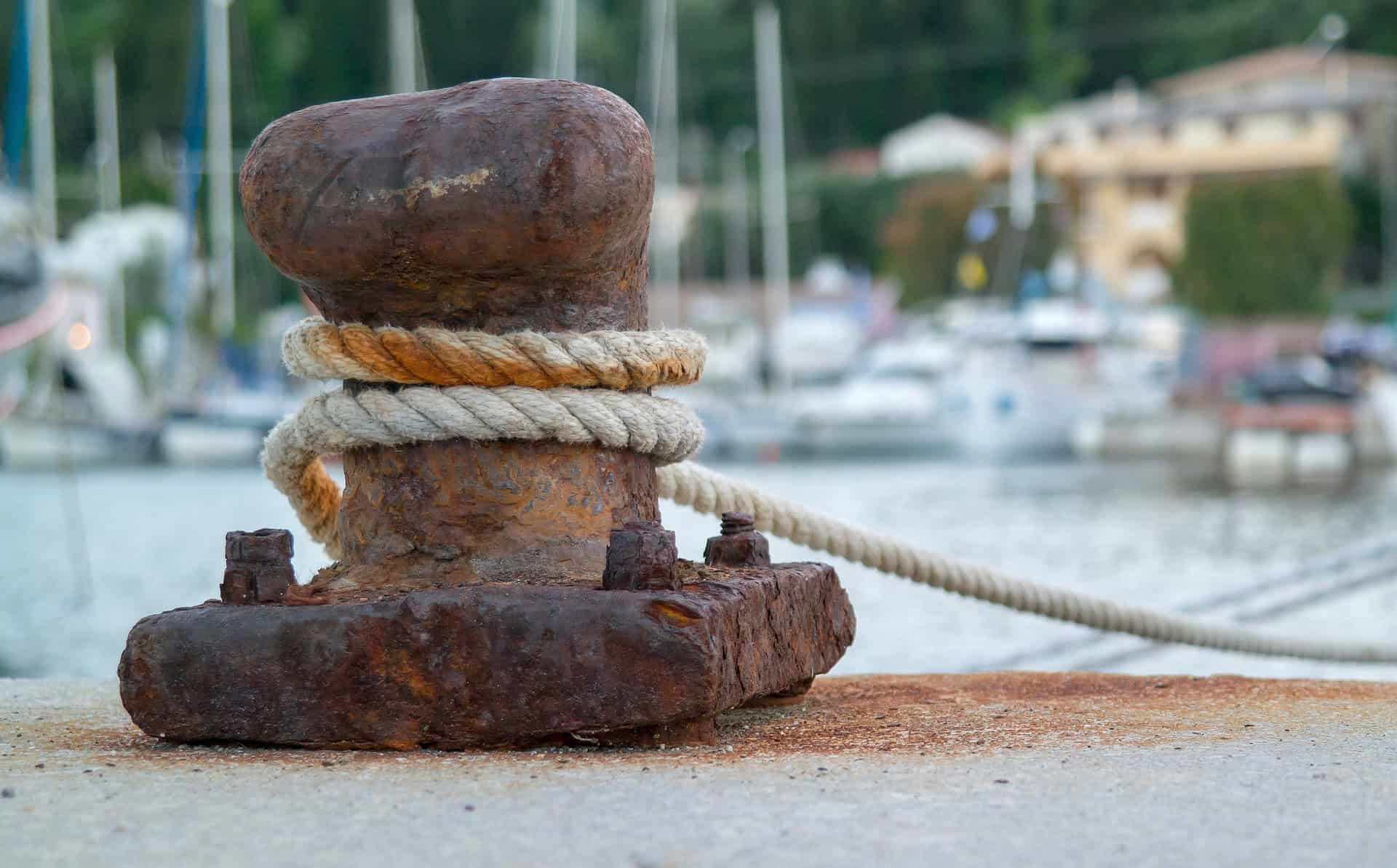
If you could see what’s happening beneath your bollards, they’d never drop down the priority list.
That’s the uncomfortable truth.
Because on the surface, most bollards look absolutely fine. Solid. Fixed. Doing the job they’ve always done. So, naturally, they get left alone while more visible, more “active” assets take priority.
But bollard failure doesn’t usually start where you can see it. It starts below – and around it.
Why Bollards Become a Problem
Bollards aren’t failing because they were badly designed. In most cases, they were installed correctly, rated appropriately (even if the SWL has long since disappeared), and built for the vessels using them at the time.
The issue is what’s changed since then:
- Vessels are bigger and generate higher loads
- Weather is more aggressive and less predictable
- Infrastructure is ageing – often by multiple decades
And most importantly? The condition of the bollard below the surface is unknown.
You can’t see:
- Voids forming beneath the foundation
- Washout around the base
- Corrosion in anchor bolts
- Cracks developing in the surrounding structure
If you could, it would be a very different conversation.
No harbour master would walk past a bollard with visibly degraded fixings or a hollowed-out foundation and think, “We’ll look at that next year.”
But because that damage is hidden, assessment often gets pushed back.
Why That’s a Risky Assumption
When a bollard fails, it’s not a mild or controlled event. You’re dealing with stored energy in mooring lines under significant tension. If the fixing gives way, that energy has to go somewhere.
And that’s where the real danger lies.
A failed bollard doesn’t just “stop working” or neatly topple into the sea. It can:
- Tear free from the structure
- Snap lines violently
- Become a projectile under load
- At that point, it’s no longer just an asset issue. You’re looking at very real risk to vessels, infrastructure, and – most importantly – people.
Real Incidents, Real Consequences
There’s no shortage of examples where bollard failure has led to major incidents:
- Carnival Triumph (2013): Three bollards failed in Mobile, Alabama. The vessel broke free, collided with others, and the incident resulted in a fatality and significant damage.
- MSC Fantasia (2009): High winds in Palma de Mallorca led to bollard failure, causing the vessel to drift and a gangway to collapse.
- VALARIS DS-16 (2022): A deteriorated bollard failed, leading to a collision between a drilling unit and a cargo vessel, costing millions.
- Norwegian Epic (2025): Bollard failure during severe weather in Catania resulted in damage to port infrastructure.
Different locations. Different conditions. Same underlying issue:
Hidden deterioration that wasn’t fully understood.
The Common Misconception Around Testing
One of the biggest barriers to proper assessment is the assumption that it’s disruptive, expensive, or likely to create more problems than it solves.
That’s often based on experience with pull testing. And to be fair, those concerns aren’t unfounded.
Pull testing can:
- Damage already weakened structures
- Take bollards out of service
- Require costly repairs if things go wrong
So it gets avoided. But that doesn’t remove the risk – it just delays understanding it.
A More Practical Approach
Assessment doesn’t have to be disruptive or destructive.
Modern non-destructive testing (NDT) methods – using Ground Penetrating Radar (GPR), eddy current, and ultrasonics – allow you to understand what’s happening inside and beneath the bollard, without removing it or applying stress.
What’s often surprising is what that data shows. Not every “at-risk” bollard needs to be taken out of service or fixed. In many cases, the outcome is simply:
- A revised SWL
- Targeted maintenance
- Ongoing monitoring
In other words, management rather than replacement.
And in terms of cost? It’s typically far less than expected – especially when compared to the operational, financial, and human cost of a failure.
Why It Keeps Getting Delayed
This is the part that’s rarely said out loud.
Bollard assessment gets pushed down the list because nothing appears wrong.
- There’s no visible defect.
- No obvious performance issue.
- No immediate pressure to act.
But that’s exactly the problem.
You’re making decisions based on what you can see – when the real risks are out of sight.
A Simple Way to Reframe It
If a bollard is carrying critical loads – and its condition below the surface is unknown – then it isn’t a low-priority asset.
It’s an unquantified risk.
And those are always the ones that come back to bite. We all have health and safety policies. They sit neatly on websites, tick the right boxes, and say all the right things.
But this is where those policies either mean something – or they don’t.
The Bottom Line
Bollard failure isn’t rare, and it isn’t unpredictable. It’s usually the result of deterioration that went unseen and unmeasured.
The good news is that assessing that risk is now straightforward, non-invasive, and often far more cost-effective than expected.
The only real question is whether it gets done before something fails – or after.
When you’re ready to remove the uncertainty, protect your people, and make informed decisions about your assets, it’s a straightforward conversation to have.