
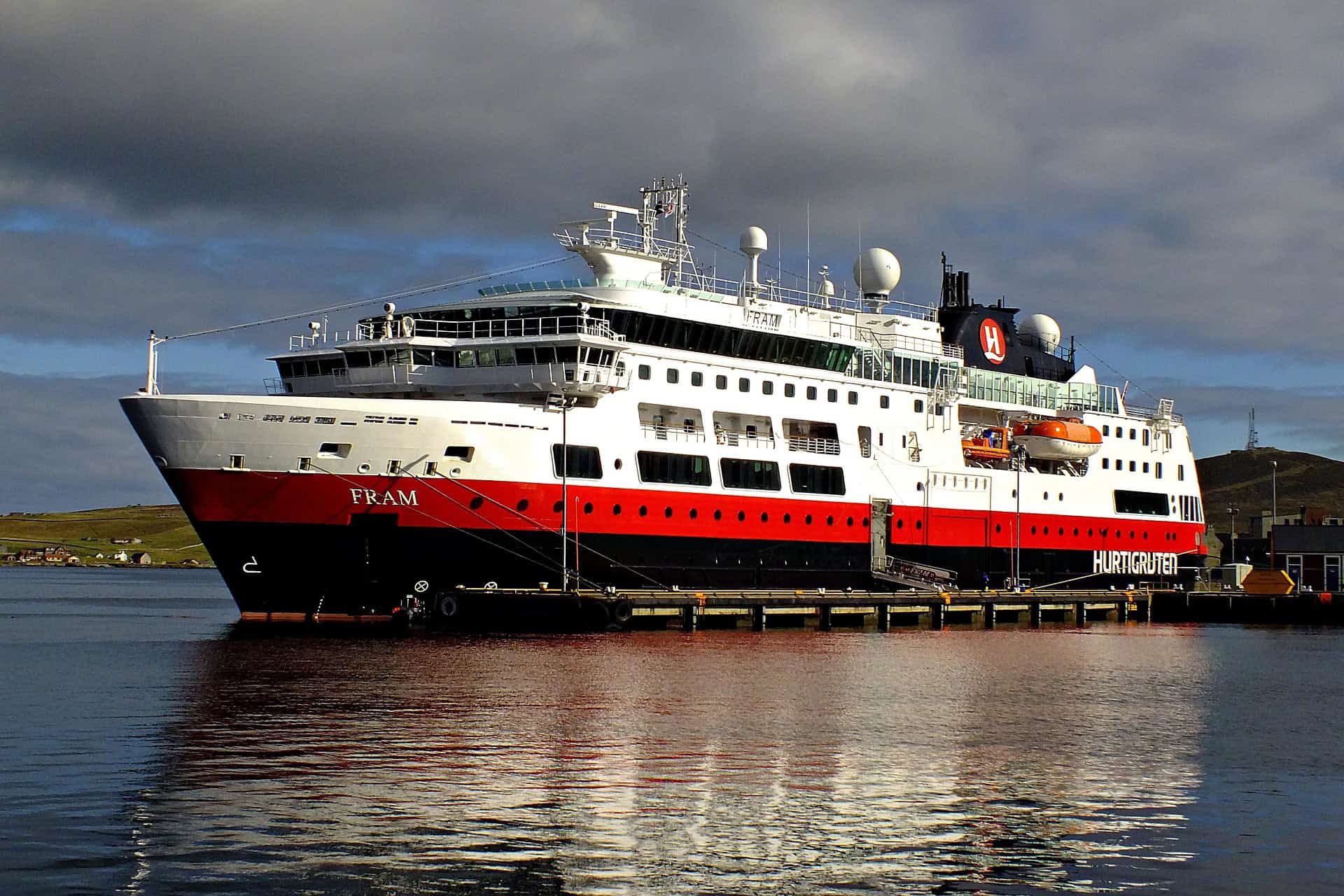
Across the UK, cruise port infrastructure is increasingly shaping both the economic and logistical reality for ports, harbours, and surrounding communities. Ports are adapting to a clear shift in maritime operations. Cruise ships are growing in size, operators are becoming more selective about where they berth, and expectations around safety, reliability, and infrastructure certainty continue to rise.
At the centre of all of this sits one question shaping decisions across the industry: Can existing infrastructure safely support today’s cruise and ferry demand?
That question now defines much of the conversation around cruise port infrastructure, particularly as ports balance ongoing operations with long-term investment planning.
It is also increasingly visible in how ports are assessed, selected, and used by cruise operators.
Ardrossan: A Port in Transition, Not a Standalone Case
Recent developments at Ardrossan Harbour highlight how seriously infrastructure is now being considered across Scotland.
Caledonian Maritime Assets Limited (CMAL) has taken ownership of the harbour on behalf of the Scottish Government, with a clear focus on long-term redevelopment and improving capability for future ferry services.
This matters because Ardrossan reflects a wider reality across cruise port infrastructure.
Some services, including larger modern vessels, are currently operating from alternative ports while long-term plans are shaped and delivered. And while each port has its own context, the underlying theme is consistent: infrastructure is being reassessed against today’s vessel requirements – not yesterday’s.
Cruise Demand Is Reshaping Expectations
Cruise traffic continues to grow across the entire UK network. As vessel sizes increase, so do operator expectations. And increasingly, cruise operators are asking ports a very direct question:
Can you guarantee safe mooring under real operational conditions?
That question sits right at the centre of cruise port infrastructure discussions. Because while berths, depths, and access matter, the final point of load transfer often comes down to something much smaller:
The bollard.
And in many ports and harbours, those bollards were designed for a very different generation of vessel.
The Challenge Beneath the Surface: Unknown Capacity
One of the most common issues across cruise port infrastructure is not visible at first glance.
It’s uncertainty.
Many ports are operating with:
- Missing or outdated Safe Working Load (SWL) data
- Limited records for older bollard installations
- No recent verification under modern vessel loading conditions
Which means that decisions often rely on assumption rather than confirmed capacity. And that creates risk – not just operationally, but commercially. Because when cruise operators assess a port, confidence matters just as much as location.
Why Traditional Pull Testing Falls Short
Pull testing has traditionally been used to validate bollard strength. However, in today’s environment, it has clear limitations:
- It can damage ageing infrastructure.
- It provides only a pass or fail outcome.
- It does not reveal subsurface or foundation conditions.
So, while pull testing may appear definitive, it often limits the amount of usable information available. It can also place additional stress on ageing infrastructure and, in some cases, worsen subsurface weaknesses – leaving the asset in a less stable condition after a test intended to remove doubt. A clear paradox in traditional assessment methods.
A Different Perspective: Understanding What’s Actually There
This is where non-destructive testing (NDT) changes the conversation. At EP Marine & Rail, we assess marine bollards using a combination of:
- Ground Penetrating Radar (GPR) to map subsurface and foundation conditions
- Eddy current testing to identify cracking and material defects
- Ultrasonic testing to assess internal integrity and hidden weaknesses of the surrounding structures as well as the bolts themselves
This approach provides something ports increasingly need: clear, evidence-based understanding of asset condition and capacity – without damage or disruption.
Why This Matters Now
Cruise operators are understandably becoming more selective about where they deploy vessels. At the same time, ports are under increasing pressure to demonstrate capability clearly and consistently. And that means infrastructure confidence is no longer optional.
It directly influences:
- Route planning decisions
- Port-of-call selection
- Commercial viability of larger vessels
- Long-term investment confidence
In simple terms:
- If a port can clearly evidence its capability, it remains competitive.
- If it cannot, opportunities will move elsewhere.
Supporting Better Decisions, Not Replacing Investment
It’s important to be clear. This isn’t about replacing redevelopment or major investment programmes.
Ports like Ardrossan, and many others across the UK, are actively progressing long-term infrastructure improvements.
But during that process, understanding the condition of existing assets is essential. In many cases, bollards can be safely downrated and kept in use instead of replaced – avoiding unnecessary intervention and reducing the risk of damage that can sometimes result from pull testing.
Final Thought
The growth of cruise activity is reshaping expectations across cruise port infrastructure in the UK. From the Shetland Islands in the far north to the Isles of Scilly in the south-west, the same theme is emerging: bigger ships require a clearer understanding of existing capacity.
And while investment will continue to drive long-term change, confidence in current infrastructure is what keeps operations moving safely today.
Better data leads to better decisions.
And better decisions support both safety as well as opportunity.