
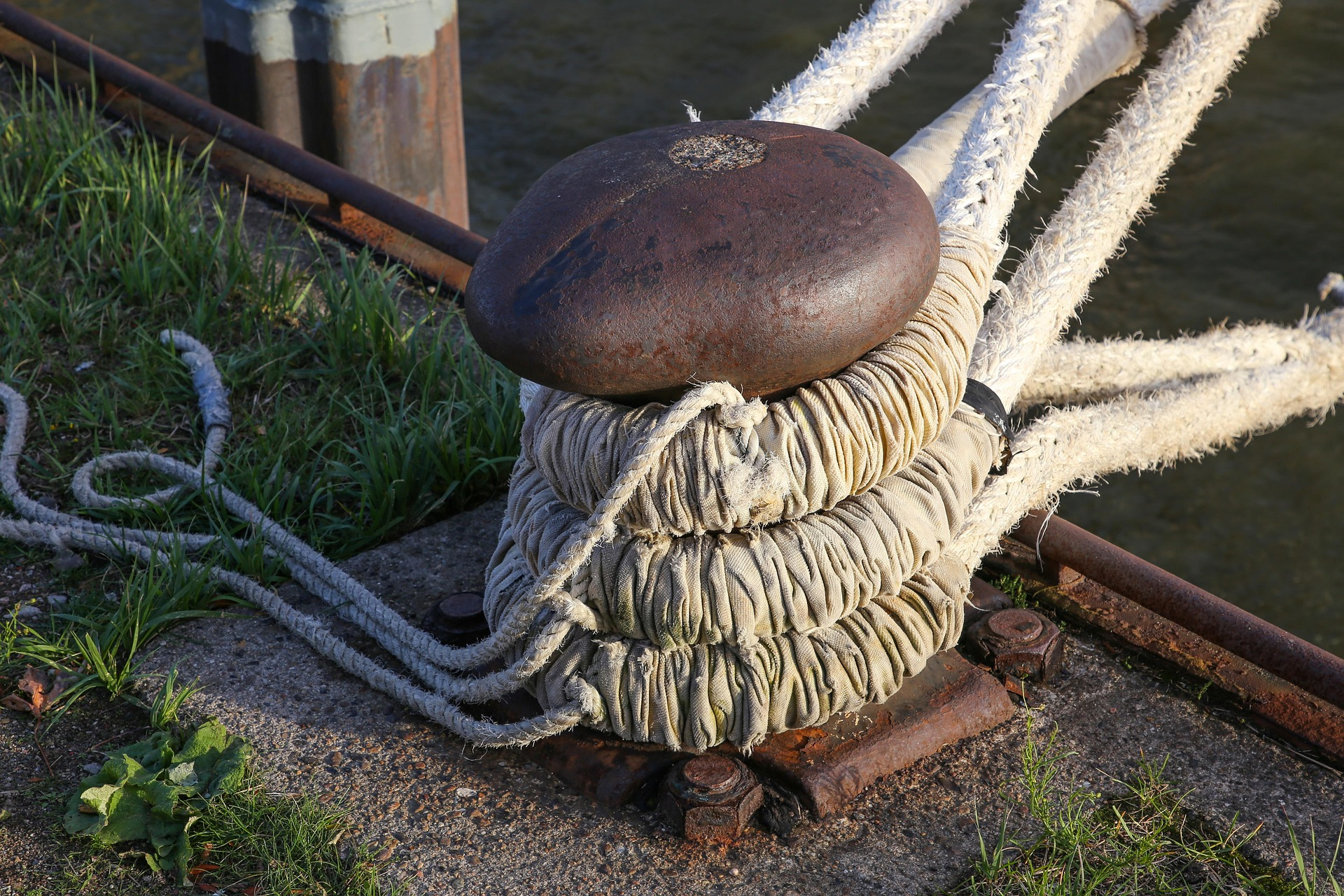
Taking responsibility for a port, harbour or naval facility means taking responsibility for infrastructure with a long operational history.
Many marine assets have been in service for decades, safely handling thousands of vessel movements through changing tides, severe weather and increasing operational demands. However, over time, organisations change, engineers move on and records become harder to trace. You may no longer have access to original drawings, inspection histories or certification documents when you need them.
This leaves today’s teams responsible for making important decisions about infrastructure with a long operational history, but incomplete information about its past.
Then someone asks a perfectly reasonable question:
“Can we confidently certify these bollards today?”
It’s a question that deserves more than an educated guess.
The challenge of certifying marine infrastructure
One conversation we recently had with a prospective client reflected a challenge that many marine operations teams face.
They were responsible for a significant number of marine bollards and needed to understand their current condition and safe working capacity. Like many organisations managing historic infrastructure, they were looking for reliable information that reflected the assets as they stand today.
Responsibility extends beyond today’s operations
No-one wants to make decisions based on assumptions. Equally, nobody wants to introduce unnecessary disruption or expense if there’s a better way of ascertaining the integrity of the asset.
There’s another consideration too. If an incident were ever to occur, those decisions are likely to come under scrutiny. Demonstrating that decisions rely on objective engineering evidence, rather than incomplete records or assumptions, gives you confidence and supports accountability in the future.
For many organisations, that’s exactly what marine bollard certification provides: documented evidence that decisions were made responsibly and using the best information available.
Do you really need the original records?
One of the questions we are asked surprisingly often is whether we need historic drawings or previous certification before carrying out an assessment.
The answer is no.
During our assessments, we focus solely on the evidence gathered from the bollard itself.
This ensures that the assessment is based on the current condition, performance and capability of the asset, rather than being influenced by historic expectations.
In some cases, relying too heavily on previous ratings can create an unconscious bias towards validating an existing SWL rather than objectively determining whether that rating remains appropriate. This approach can overlook deterioration, modifications or changes in operating conditions that may have occurred over the asset’s service life.
A robust assessment must therefore establish the actual condition of the asset and its fixings before determining an appropriate safe working load.
Establishing a safe working load you can rely on
Once we assess the condition of a bollard, we determine an appropriate safe working load (SWL) for continued operation.
A bollard’s SWL does not represent the maximum force the asset could theoretically withstand. Instead, it defines the safe operational limit by applying appropriate safety factors and accounting for the uncertainties that exist within any real-world structure.
Mooring loads vary depending on vessel characteristics, wind, tide, current, swell and the overall mooring arrangement. A robust assessment must therefore consider both the condition of the bollard itself and the operational environment in which it performs.
The assessment may confirm that the existing SWL remains appropriate. Alternatively, we may recommend a revised rating that provides a more realistic and evidence-based operating limit. This allows the asset to remain safely in service while the organisation plans future maintenance or investment.
A well-supported down-rating does not represent asset failure. It provides a practical engineering solution that balances operational requirements, safety and asset life extension.
Understanding how the bollard performs in operation
A marine bollard operates within a constantly changing environment. The vessel alongside the berth moves continuously. Tidal changes, wind, swell and current alter the way forces transfer through the mooring arrangement.
During assessment, we observe how loads transfer through the bollard, its fixings and the surrounding structure as forces change during operation. This allows us to understand how different components respond to tension, compression and movement within the installation.
Repeated loading throughout an asset’s service life leaves evidence of how it has performed in its working environment. By analysing these responses, we build a clearer picture of the bollard’s condition, performance and remaining capability.
This deeper understanding enables you to make better-informed decisions around operational limits, maintenance requirements and future investment.
Is pull testing always necessary?
Another question that naturally follows is whether pull testing is required before issuing marine bollard certification.
Traditionally, operators have used pull testing to demonstrate that a bollard can withstand a specified load. However, it is important to understand the information a pull test provides and the limitations of that information.
A pull test demonstrates how a bollard responds to a specific applied load at a specific point in time. It confirms whether the asset withstands the test load, but it does not provide a complete picture of the condition of the bollard, its fixings or the surrounding structure.
The test itself also introduces significant forces into both the bollard and its supporting infrastructure. Although the bollard may successfully complete the test, the process does not reveal whether internal deterioration, corrosion, cracking or changes within the surrounding structure have occurred.
Similarly, passing a pull test does not necessarily confirm that hidden defects or foundation issues will not affect future performance.
For these reasons, many marine teams now consider non-destructive assessment methods that provide a broader understanding of both the condition and behaviour of their infrastructure.
Building confidence through evidence
By combining specialist, non-destructive assessment techniques, we build a detailed picture of the bollard’s condition without removing it from service or disrupting normal operations.
This allows us to assess the condition of the bollard and its fixings, establish realistic SWLs and, where appropriate, recommend revised load ratings based on the asset’s actual condition.
While historical records can provide useful context, they are not always available or required. By assessing the asset as it stands today, we provide reliable engineering evidence to inform decisions, plan future investment, confidently certify marine bollards and continue operations with confidence.