
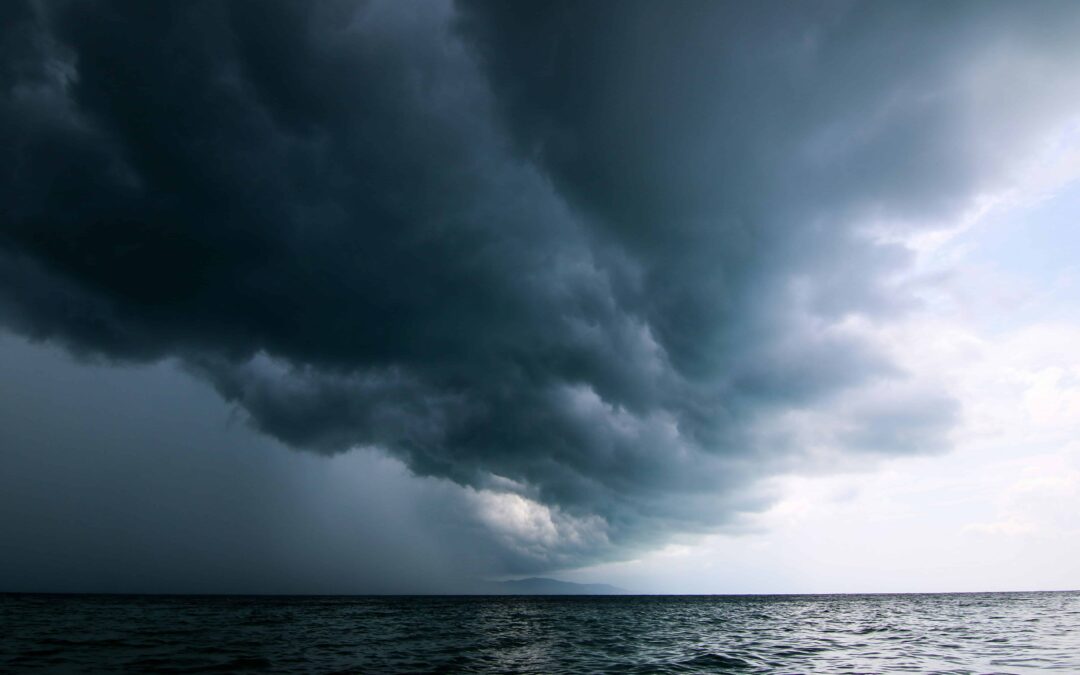
You’ve checked the window again, haven’t you? That drizzle creeping sideways under the eaves, the mist hanging over the hills, the flat grey sky that seems to follow you from Cornwall to Scotland. Some days it’s just background noise. Other days it feels like it’s testing your patience – and your bollards.
More Than Background Noise: Weather Shapes Everything
Weather impacts everything. Rising tides, sudden storms, occasional sun burn and yes, the creeping impact of rising sea levels affect the safety and resilience of ports, jetties, and timber structures.
Watching and Experiencing the Elements
Those of us who work with marine and pole infrastructure notice everything. I’ve even auto-rotated a helicopter backwards in a snowstorm (hello, it’s Kate) – giving you a sense of how seriously we take watching and experiencing the weather.
(For the pilots reading, yes, it was one of those days. I was in my little yellow Robinson R22 when a snowstorm closed in fast. Climbing seemed sensible until the windscreen began to ice over and visibility vanished. Descending wasn’t much better as the conditions put us at real risk of carb icing. The headwind was so strong that although we maintained positive airspeed, our groundspeed crept backwards. With both visibility and engine reliability in question, the safest call was to autorotate and put her down. Icy, dicey, and an enormous relief to be back on terra firma. Ten minutes later the sky was a perfect, innocent blue again: a reminder of just how quickly the weather likes to change its mind.)
At EP Marine & Rail, people often assume we’re obsessed with bollards, quay and rail infrastructure and timber poles. And, to be fair, we are. But if we’re honest? What really has us regularly checking the sky, squinting at tide gauges, and muttering “dreich” under our breath is… the weather.
Yes, the weather.
From Cornwall to Scotland: The UK Offices and Their Weather
Right now, as I write this, rain lashes against my window in Arrochar. The mountains drape themselves in mist, all ethereal and brooding. Cornwall, where one of our offices sits, is damp but comparatively mild – a drizzle with a hint of sea salt. Manchester, home to our head office, is… wet and grey. Always…. And across all three offices, whether it’s sun, storm, or that uniquely Scottish persistent drizzle, one truth binds us: the weather matters.
The weather affects everything. Wood poles decay, warp or crack. Metal bollards bear the brunt of pounding tides and shifting moorings. Jetties creak under stress. A sunny day might feel blissful, but we’re always keeping a wary eye on the barometer, wondering when the next storm or rising tide will arrive.
The Hidden Impact: Rising Sea Levels and Marine Infrastructure
Which brings me to the fact that anchors this post, literally and figuratively: rising sea levels.
According to the latest report from the National Oceanography Centre, sea levels around the UK are now rising faster than the global average. Tide-gauge records since the 1900s show that two-thirds of that observed rise has happened in just the last ~30 years. And it’s not just about floods: higher baseline sea levels amplify the impact of storms, meaning surges and high tides reach places they never did before. Sea-level rise happens unevenly, affected by warming seas, shifting currents, land motion (whether sinking or rebounding), and even changes in ocean density. Parts of the UK coast, it turns out, are feeling this faster than many other parts of the world – even faster than the Indian Ocean in some cases.
Rising sea levels matter for our work, and in more ways than most people realise.
These forces shape everything we inspect, reinforce, and maintain across our coastal sites. Storm surges add extra stress behind bollards, influence the condition of jetties, harbour walls, timber piles, and even the ground they’re anchored into.
Beyond the Shoreline: How Utility Poles Feel the Force
And it doesn’t stop at the water’s edge.
The same climatic shifts that reshape coastlines also place enormous pressure on the UK’s utility wood poles – the ones that keep electricity flowing to homes, hospitals, ports, and critical sites.
Fierce winds strain overhead lines. Saturated soil softens and shifts, undermining pole foundations. Storm surges push saltwater into environments where timber was never meant to endure which accelerates decay and reduces structural integrity.
When the Humble Pole Becomes Critical
It sounds dramatic, but it’s real: if poles fail, entire communities can be plunged into darkness at the exact moment they need power the most. Ports rely on electricity for pumping stations, communications, signalling, lighting, and emergency systems. Without it, operations stall and safety risks escalate. Suddenly, the humble wood pole becomes the mainstay of resilience – until it’s not.
Why We Watch, Measure, and Prepare
This is why we care. Why we look thrice at the sky. Weather isn’t just something we chat about – it’s something we prepare for. Rising sea levels and worsening weather conditions don’t just raise water and increase wind; they raise stakes for everyone relying on infrastructure that must stand firm in an increasingly unpredictable world.
Rising Challenges: Storms, Tides, and Resilience
Our obsession with weather is, secretly, an asset. Every inspection, assessment, and recommendation is informed by decades of watching, listening, measuring, and yes, occasionally flying through some of the UK’s most challenging weather.
Storms that once seemed “normal” can suddenly become dangerous. Even structures that survived decades of drizzle, frost, and wind now face a world where tides creep higher, storms hit harder, and resilience isn’t optional.
A Respect for Weather, and Its Lessons
So yes, we work with wood poles, marine bollards, and surrounding structures. But beneath the spreadsheets, inspection checklists, and maintenance plans, we are a team totally fascinated, sometimes obsessed, and always deeply respectful of the weather. Rain, mist, sun and gales are context and challenge.
Collective Responsibility: Acting Against Severe Weather
And as rising sea levels continue to reshape our coasts, we’ll be watching – not just for the infrastructure, but for that shared human fascination with the sky. For all the pilots, harbour masters, coastal managers, DNOs and anyone with a stake in the weather’s impact: if you see us looking up, squinting, or muttering “dreich,” know this: it’s not obsession. It’s diligence, experience and respect.
We may not be able to command the clouds, but together we can work to lessen the impact of increasingly severe weather systems – a reminder of how our everyday actions shape the world we all rely on.
Think your bollards, jetties, or wood poles are ready for the next dreich day? Let’s check together. Arrange a no-obligation call or site visit – we’ll bring the expertise, you bring the coffee.