
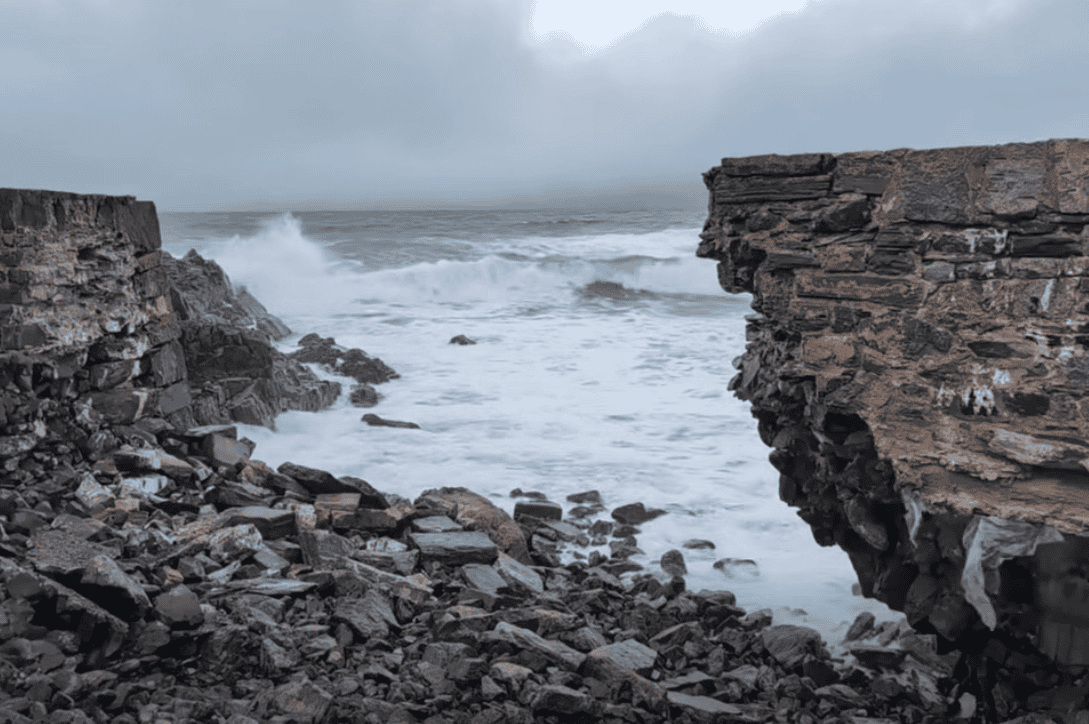
Visual inspection gives you what you can see. Unfortunately, it often misses what lies beneath. When that hidden damage grows unchecked, failure can happen quickly and without warning. For example, on New Year’s Day 2026, severe storm seas breached a section of the historic Portsoy Harbour wall in northeast Scotland. Emergency protection works are now underway to protect the remaining structure and begin stabilisation.
Meanwhile, similar structural issues occur worldwide, showing that relying on sight alone leaves critical risks hidden. Therefore, marine infrastructure owners must look deeper than surface checks.
Surface Checks and Their Limits
Visual inspection is the first step in many maintenance programmes. However, it only shows what is visible externally. This means:
- A smooth surface can mask internal voids.
- No visible cracking does not mean the foundation is stable.
- Absence of displacement does not equal absence of hidden deterioration.
In other words, what you see can give a false sense of security.
Examples from Around the World
Portsoy Harbour, Scotland (2026)
- Heavy storms battered the harbour wall, causing a partial breach that wasn’t obvious until it failed.
- Officials had begun planning repairs, but the damage suddenly became urgent when weather conditions worsened.
Harbour wall collapse in West Looe, England (2025)
- Similar scenes played out in West Looe when a section of the harbour wall collapsed into the river.
- Early stage work to stabilise the collapse is ongoing, illustrating how harbour wall failures can happen even in areas thought to be stable.
Storm damage to Genoa breakwater, Italy (2025)
- Severe storm seas damaged part of the breakwater structure during construction.
- Repair efforts have focused on ensuring integrity before operations resume, underlining how surface damage can signal deeper threats.
These examples show that visible damage is often the final stage of deeper deterioration, not the first sign.
Why Visual Checks Miss the Real Issues
Marine infrastructure exists in a dynamic environment. Consequently, a range of hidden processes take place beneath the surface:
- Washouts and voids form where sediment and fine materials erode over time.
- Scour and undermining weaken sub‑surface support.
- Erosion from tides and wave action attacks foundations.
- Material fatigue and hidden corrosion can degrade fixings long before surface cracks appear.
These hidden processes do not show up during a walk‑around inspection. As a result, visual checks often miss the very issues that lead to failure.
The Case for Non‑Destructive Testing (NDT)
Given these limitations, visual inspection should be just one part of a broader strategy. Non‑destructive testing (NDT) adds depth to your checks:
- Ground penetrating radar (GPR) reveals voids, washouts, and changes below the surface.
- Eddy current testing spots corrosion and material loss in metal fittings.
- Ultrasonic testing checks embedding depth, bolt integrity, and internal defects.
Together, these tools reveal what visual checks cannot. They help you see below the surface before a problem becomes an emergency.
In our previous article, “Ground Penetrating Radar in Action: Data‑Driven Assurance for Mooring Infrastructure”, we explained how GPR and other NDT methods uncover hidden deterioration that visual inspection misses. This point applies equally here: seeing beneath the surface is essential to preventing failure.
What This Means for Asset Owners
Relying only on visual inspection means you might:
- Miss early‑stage washouts or voids.
- Underestimate the extent of damage.
- Delay repairs until visible failure occurs.
Instead, pair visual inspections with targeted NDT. This layered approach helps you:
- Detect problems early.
- Plan repairs before failure.
- Reduce costs and disruption.
Visual inspection has value, but it only tells part of the story. When infrastructure lies in dynamic marine environments, what you can’t see matters most. By combining visual checks with non‑destructive methods like GPR, eddy current, and ultrasonic testing, you get the full picture – and a better chance of keeping your structures safe and reliable.
If you want to go beyond what the eye can see, talk with our team about how integrated marine infrastructure inspections can help protect your assets.