
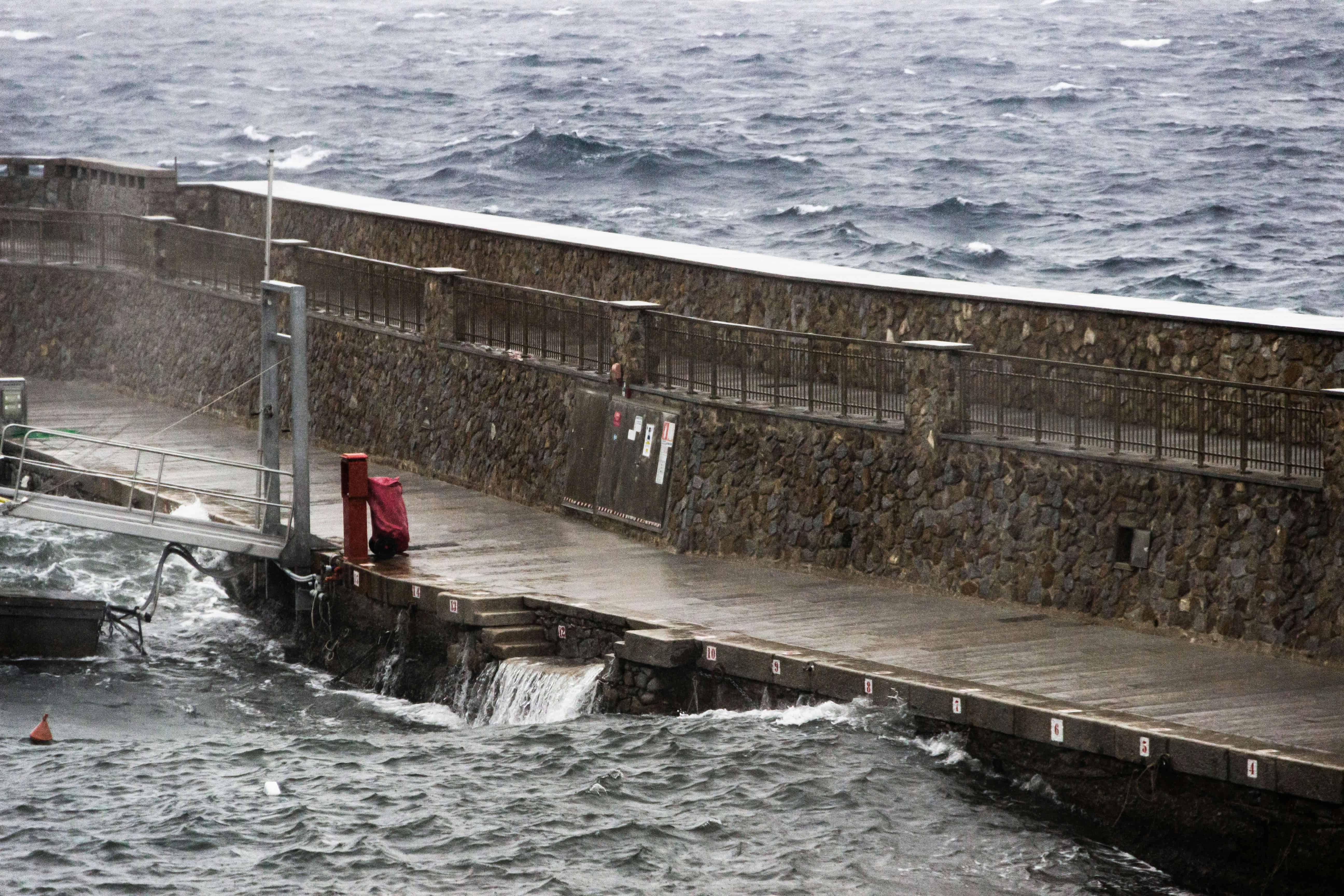
Over the past year, the UK has endured a series of severe storms that have tested the resilience of ports, harbours, and marine infrastructure. From Storm Éowyn in January 2025 to Storm Goretti and Storm Ingrid in early 2026, these extreme weather events have highlighted the UK harbour storm risk and the importance of knowing the condition of every bollard, quay wall, and mooring interface before the next storm hits.
If we’re not careful, we can become so used to hearing about storms, flooding, and structural failures that we become numb to the headlines – until it affects our own port, our team, or our operations. While making the news headlines they also mean operational risks, reputational risks, and safety risks.
A Year of Storms: January 2025 – January 2026
Storm Éowyn – January 2025
One of the most powerful windstorms in recent UK history. Gusts exceeded 100 mph in exposed locations, causing widespread power outages affecting over a million homes and suspending ferry services across Scotland and Northern Ireland. For marine infrastructure, Éowyn dramatically illustrated UK harbour storm risk, with extreme winds and wave action placing maximum loads on quays, bollards, and mooring points.
Storm Floris – August 2025
A summer storm with gusts over 80 mph – an unusual event that signals changing UK harbour storm risk patterns. Ports faced operational challenges even outside traditional storm season, demonstrating that infrastructure must be prepared year-round.
Storm Amy – October 2025
Strong winds combined with heavy rainfall challenged northern ports. The combination increased scour around bollard foundations and created hazards for mooring operations, highlighting the ongoing risk to harbour assets from extreme weather.
Storms Benjamin, Claudia, Bram – Late 2025
Back-to-back storms compressed recovery windows, creating cumulative stress on assets. Flooding, heavy rain, and high winds exposed weaknesses in older harbour walls and infrastructure, including mooring points designed for smaller vessels – a stark reminder of UK harbour storm risk.
Storm Goretti – January 2026
Storm Goretti brought red and amber warnings for wind and snow, with gusts approaching 99 mph along exposed coasts. Multi-hazard loading tested bollards, quay walls, and supporting infrastructure – further demonstrating that proactive assessment is critical to manage UK harbour storm risk.
Storm Ingrid – January 2026
Storm Ingrid caused widespread disruption along the south-west coast, with severe winds, heavy seas and storm surge impacting ports, harbours and coastal infrastructure. Several locations experienced damage to quay edges, dangerous overtopping, and increased strain on mooring systems as vessels rode out prolonged periods of extreme loading.
Understanding UK Harbour Storm Risk
While extreme weather challenges operational schedules it also tests the structural integrity of assets that were often built decades ago for vessels far smaller than today’s ships. Each storm shows how quickly hidden weaknesses can escalate into costly failure:
- Mooring bollards stressed beyond design limits
- Scour and foundation washouts undermining quays
- Unexpected downtime from damaged infrastructure
- Increased exposure to litigation and reputational risk
When we read about storms in the news, it’s easy to shrug off the warnings. But when a harbour wall collapses, a bollard fails, or operations halt unexpectedly, the reality hits – and the cost is immediate and tangible.
Rethinking Testing: Beyond Pull Tests
Traditionally, pull testing has been used to “prove” bollard integrity. But this method has significant limitations:
- It can damage older bollards, leading to replacement costs and downtime
- It only measures surface-level strength, missing voids, cracks, or foundation weaknesses
- It forces a binary outcome: pass or fail, rather than allowing a measured SWL rating
In an era of increasing UK harbour storm risk, relying solely on pull testing is increasingly risky.
Non-Destructive Testing (NDT): A Smarter Approach
EP Marine & Rail provides advanced NDT assessments for marine bollards, and quay interfaces using:
- Ground Penetrating Radar (GPR) to map subsurface and foundation conditions
- Eddy Current and Ultrasonic testing to detect cracks, corrosion, and fixings weaknesses
This approach enables a full assessment up to 5m horizontally and 8m vertically, without asset removal, disruption, or stress. The result:
- Accurate Safe Working Load (SWL) evaluation, even where markings are missing
- Early detection of weaknesses, allowing targeted repair and preventative measures
- Reduced risk, cost, and downtime compared with destructive pull testing
- Clear, auditable data for maintenance planning, regulatory compliance, and operational risk assessment
Using these tools allows operators to anticipate failure before storms test the limits of ageing infrastructure, directly mitigating UK harbour storm risk.
Reflecting on the Storms: What This Means for You
Storms like Éowyn, Floris, Amy, Goretti and Ingrid are wake-up calls, not just headlines. They demonstrate that:
- The infrastructure you rely on is under constant stress
- Reactive repair is costly, disruptive, and exposes you to risk
- Proactive, data-driven assessment ensures confidence and operational continuity
It’s not enough to hope that a bollard or quay wall will withstand the next extreme event. Operators who anticipate weaknesses and assess structural integrity comprehensively are the ones who avoid downtime, litigation, and reputational damage.
Severe storms in the past 12 months highlight how quickly environmental extremes can stress marine infrastructure. By understanding asset condition before the next wind, surge, or flood, you protect your operations, your team, and your reputation.
Exploring targeted non-destructive testing now could be the difference between reactive firefighting and confident, planned management. Send us an email or give us a call and we can explain how our processes provide the reassurance you need when the next storm approaches.