
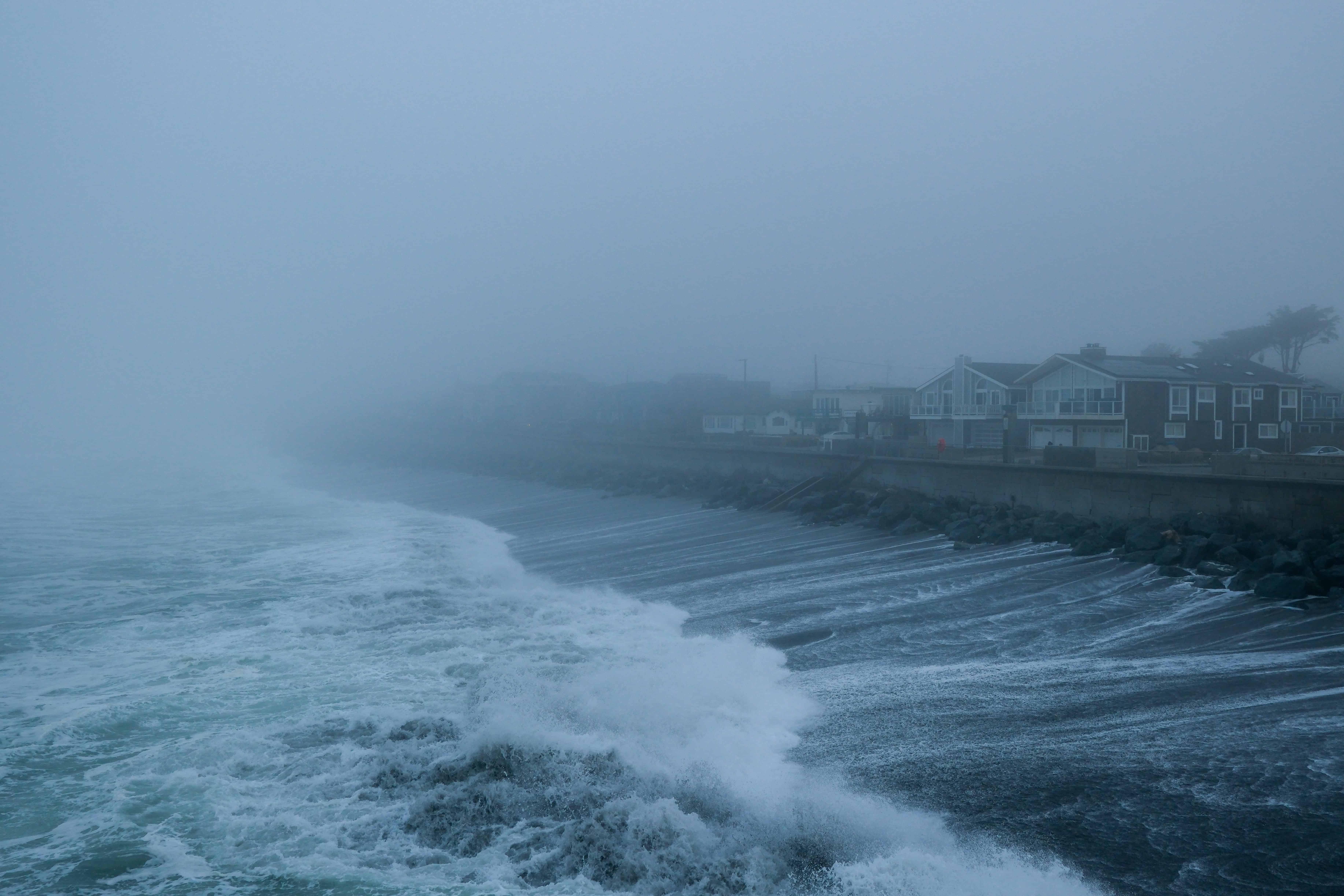
Storms Austen and Boelo have provided a stark reminder of the pressures severe weather can place on the UK’s coastal infrastructure.
During Storm Austen, the Met Office recorded gusts of 76 mph in the Isles of Scilly and 71 mph at Culdrose in Cornwall. Thousands of properties lost power, while the storms disrupted transport and damaged infrastructure across affected areas. Just days later, Storm Boelo brought further strong winds, heavy rain and coastal flooding across Scotland, Northern Ireland and parts of northern England.
The damage was evident along exposed coastlines. At Falmouth, tugs Cannis and Morva were deployed to help hold RFA Argus alongside the wharf during high winds. On the west coast of Scotland, large waves overtopped coastal defences between Skelmorlie and Largs, severely damaging the A78 and washing away part of the sea wall. Further along the coast, around Arrochar, high winds and tidal surges breached the seawall in several places. In Brighton, part of the historic West Pier collapsed into the sea during Storm Austen. The pier had already suffered years of deterioration, illustrating how severe weather can place additional strain on infrastructure that is already vulnerable.
These incidents highlight interconnected challenges: keeping vessels secure alongside, maintaining coastal structures and understanding how existing deterioration can leave assets vulnerable when severe weather strikes.
For marine operators, this raises an important question: how confident are you in the condition of your marine infrastructure?
Answering that question means looking beyond the visible condition of a mooring bollard to consider its anchorage, the quay or deck supporting it, and the wider structures exposed to waves, tidal surges and repeated loading.
When mooring equipment fails, the consequences can be serious
A large vessel can become a vast sail in a storm, with powerful gusts pushing against its hull and superstructure. As wind and waves intensify, the vessel surges, rolls and strains against its moorings, transferring substantial forces through the ropes to the bollards and their foundations. When forces become unevenly distributed, individual components can experience particularly high loads.
And if a vessel breaks away due to a mooring component failure, it may strike another vessel or structure, or obstruct a navigation channel. A drifting vessel also puts crew and shore personnel at risk. The resulting damage can halt port operations, delay cargo movements and leave operators facing expensive repairs.
Recent incidents show how quickly these failures can escalate
In November 2025, a severe thunderstorm struck the Port of Brisbane, with wind gusts reaching 71 knots. Three container ships broke their moorings, one subsequently grounded, and a fourth vessel was blown away from its berth while tugs attempted to hold it alongside. Mooring lines parted under the strain, and damage to one vessel’s winch controls further complicated the response. Fortunately, no one was injured. The Australian Transport Safety Bureau’s investigation remains ongoing, but the incident illustrates the immense forces that can act on moored vessels and the challenges of managing several vessels in an emergency.
Shore-side equipment also plays a crucial role. In March 2022, the VALARIS DS-16 broke away from a shipyard dock in Pascagoula, Mississippi, during winds of 30–40 knots. A bollard failed at its base and was pulled into the water, allowing the vessel to drift across the channel and collide with a cargo ship. Investigators estimated the resulting damage at nearly $5 million. They identified corrosion and steel wastage in several bollards. They also found that modifications to the failed bollard had allowed it to accommodate additional mooring lines.
A further case reported by maritime safety organisation CHIRP involved a heavy-lift vessel during gusts of around 50 knots. Its stern lines detached from the dock, allowing the vessel to swing across the dock basin and strike another vessel and a railway bridge. The investigation found that the bollard securing the stern lines of both vessels had been pulled completely out of its foundations. Attaching both vessels’ lines to the same bollard had created a single point of failure.
These incidents show that mooring safety depends on more than the condition of individual bollards. The integrity of their foundations and the way mooring lines are arranged also matter when loads increase in severe weather.
The risks you cannot necessarily see
Saltwater, corrosion, repeated loading and earlier repairs or modifications can gradually weaken marine infrastructure.
A mooring bollard may look sound externally while cracking, corrosion, material loss or defects in its anchorage remain hidden. Equally, an existing SWL rating may no longer reflect the asset’s current condition.
The surrounding quay or deck also deserves attention.
Waves, tidal surges and water moving around vessels can scour the seabed and wash material away from quay structures. Over time, this movement can create voids beneath or behind foundations, reducing support and compromising structural integrity. Meanwhile, repeated mooring loads place stress on bollards, their fixings and the structures that support them.
These defects can remain hidden below the waterline or beneath concrete. Inspecting the bollard alone may not reveal the full extent of washout or voiding. Even an underwater inspection may miss defects within a structure or behind its visible surfaces.
For marine operators, this creates practical questions. Is the existing load rating still defensible? Are the foundations and supporting structures sound? Which assets need further investigation, and where should maintenance budgets be prioritised?
We sometimes encounter bollards that are structurally sound but are anchored into a deck that is not. Assessing the bollard without considering its supporting structure could therefore leave an important part of the risk unaddressed.
Assessing the infrastructure ports depend on
EP Marine & Rail assesses bollards, anchorages and fixings, as well as marine infrastructure such as quay walls, suspended decks and steel piles. We select assessment methods to suit the structure, its condition and the questions we need to answer.
We can establish or revise SWL ratings for mooring bollards from our assessment findings, even where historic drawings or existing ratings are unavailable.
You will receive an auditable engineering report that records the condition of the assets we assess, explains our findings and identifies where further investigation or maintenance may be necessary.
We also organise our work around each port’s operational requirements. Vessel movements and berth availability can limit access to individual bollards, so we coordinate with the port team to arrange suitable working windows. Where necessary, the team can arrange the temporary release or transfer of mooring lines and restore the agreed mooring arrangements when the assessment finishes. We can also work overnight or within short access windows to minimise disruption.
With more than 20 years’ experience working with commercial, MOD, historic and heritage ports and harbours, we understand the practical realities of operational marine environments and the importance of providing reliable engineering information in a way that works for the people responsible for keeping them safe and operational.
Plan ahead for the next storm season
Storms Austen and Boelo have brought the condition of coastal infrastructure into sharp focus. And the quieter periods between severe weather events are a good opportunity to check the condition of mooring assets, existing load ratings and identify structures that need closer investigation.
EP Marine & Rail helps you assess mooring assets and wider infrastructure, providing engineering information to support those decisions. If you are reviewing your maintenance priorities or have concerns about particular assets, we would be happy to discuss your requirements.